
The Problem: No National Midwife Standards.
In the United States, home birth safety is left to chance. There are no national standards—just a chaotic mix of state laws that vary wildly in who can call themselves a midwife, what training they need, and which births they’re allowed to attend. Some states impose no regulation at all. The result is a dangerous patchwork system, where families often assume credentials mean competence—but in many cases, they don’t. Unlike countries with integrated, regulated midwifery models, the U.S. permits individuals with little or no formal training to attend births under the title “midwife.”
Not All ‘Midwives’ Are the Same
In the United States, anyone can call themselves a midwife—and in many states, they can legally attend births without formal education, hospital experience, or malpractice insurance. Midwife credentials have been created to professionalize untrained lay midwives without actually requiring rigorous standards. It offers the appearance of legitimacy without the foundation of accredited training. These “credentials” function more as a marketing tool than a safeguard—and it carries a built-in conflict of interest, since income often depends on births staying out of the hospital. Without national standards or clear definitions, families are left to assume all “midwives” are equally qualified. They’re not and that confusion puts lives at risk.
-

Training and Standards Vary
Unlike other countries, the U.S. has multiple types of midwives but not all of them meet international standards for education and training. Some have graduate degrees, while others have no formal education. This variation creates confusion and increases risk.
-

A System Designed to Confuse
The lines have been intentionally blurred between types of midwives, making it harder for families to distinguish between safe care and undereducated or unregulated practice. This “organized confusion” allows low-standard providers to thrive.
-

A Conflict of Interest
While most families assume their midwife will “just transfer” if needed, the financial, ideological, and reputational costs of doing so can be significant. Without system-wide standards or accountability, these pressures can compromise safety and cost lives.

The Evidence.
In states that allow midwives with lower educational standards to practice, worse outcomes have followed. Research shows increased rates of neonatal death and preventable birth injuries when care is provided by midwives who do not meet national or international training standards.
Poor outcomes are especially pronounced when high-risk births—such as breech birth or multiples—are attempted at home.

When states license undertrained midwives, it gives the public a false sense of security and signals that these providers are qualified—even when they are not.
Families assume that licensure ensures proper education, clinical competency, and emergency backup. But in many states, midwives can be licensed with minimal training, no degree requirement, and little to no integration with hospitals.
Once licensure is granted, there is often no meaningful way to regulate practice, limit scope, or enforce accountability. The state gives its stamp of approval—but loses the ability to protect the public from unsafe care.
The Illusion.

The Narrative.
Alongside the safety concerns and regulatory gaps, there’s a carefully crafted narrative that portrays all midwifery as inherently safe, empowering, and equivalent. These messages often focus on freedom, feminism, or cultural tradition—but they rarely mention training, oversight, or outcomes. To understand the full picture, we need to examine the arguments being used to defend an unsafe system.

Hear from real families whose home births ended in tragedy—attended by midwives whose credentials lacked formal education, clinical training, or oversight.
The Stories.
Home Birth Safety FAQs
-
No. This is about making home birth safer. We believe families have the right to choose where they give birth—but that choice must be informed, and the providers attending those births must meet reasonable, evidence-based standards. Holding all midwives to consistent safety expectations is the best way to preserve both autonomy and accountability.
-
No. Home birth carries significantly higher risks in high-risk pregnancies—including breech presentation, twins, prior cesarean, preterm labor, and others. Even the best-trained midwives cannot perform emergency surgery or manage sudden complications at home. The safest approach is to restrict out-of-hospital birth to low-risk pregnancies under the care of qualified, licensed providers with clear transfer plans.
It is deeply concerning when any type of midwife chooses to attend high-risk births at home, as this decision ignores well-established medical guidelines and increases the chance of preventable harm. Safe midwifery means respecting the limits of out-of-hospital care.
-
No. Studies from countries like the Netherlands, Canada, and the UK often show that home birth can be safe within their systems—but those systems have strict national standards, highly educated midwives, and full hospital integration. Midwives in those countries meet consistent training requirements, follow risk-out guidelines, and work directly with the healthcare system to ensure rapid transfer when needed.
In contrast, the U.S. lacks national midwifery standards, allowing a wide range of credentials—including some with no formal medical education. Many home births here are attended by providers who are not integrated into hospitals and who may not meet international safety benchmarks. That’s why no study from outside the U.S. can be used to justify the current home birth model here. The context is completely different—and so are the outcomes.
-
No. Autonomy and reproductive freedom do not mean endorsing unsafe care. In fact, many people who support abortion rights also believe strongly in protecting patients from harm through clear standards, qualified providers, and regulatory oversight. Just like abortion access requires trained clinicians, hospital access, and informed consent, so does safe birth.
Unregulated home birth—especially when attended by undertrained or unlicensed providers—often hides behind the language of “choice,” while putting families at unnecessary risk. Supporting reproductive justice means ensuring all pregnancy outcomes—abortion, birth, miscarriage—are safe, respectful, and rooted in evidence-based care. Freedom without safety isn’t freedom at all. It’s abandonment.
-
Licensing CPMs gives the appearance of safety without requiring the education or clinical training needed to ensure it. In most states, CPMs are not required to have hospital-based experience, malpractice insurance, or participation in outcome reporting. Legal recognition can mislead families into believing that all midwives meet rigorous standards. Studies show that outcomes for CPM-attended home births are significantly worse than for CNM-attended births, including higher neonatal mortality.
-
Improving education might seem like a good compromise, but the CPM credential has remained largely unchanged since it was created in the 1990s. This issue was addressed during the U.S. Midwifery Education, Regulation, and Association (US MERA) collaboration. CPM leadership ultimately declined to adopt internationally recognized benchmarks for safe and quality midwifery care. As a result, continuing to license this credential reinforces a model that refuses to evolve. Families deserve a clear, evidence-based standard of care for the individuals they trust as midwives.
-
Certified Midwife (CM) licensure has been limited by state-by-state regulatory barriers and overshadowed by the growth of the CPM credential, which offered an easier to obtain credential and lower standard that diverted focus from safer alternatives. As a result, fewer individuals have pursued the more rigorous CM path.
Still, the CM remains a strong, underused option. It provides a non-nurse route to midwifery that meets international standards for education and clinical training. Promoting CM licensure offers a credible alternative when sunsetting CPM laws—preserving midwifery for non-nurses without compromising safety.
Good Midwifery Makes Home Birth Safer.
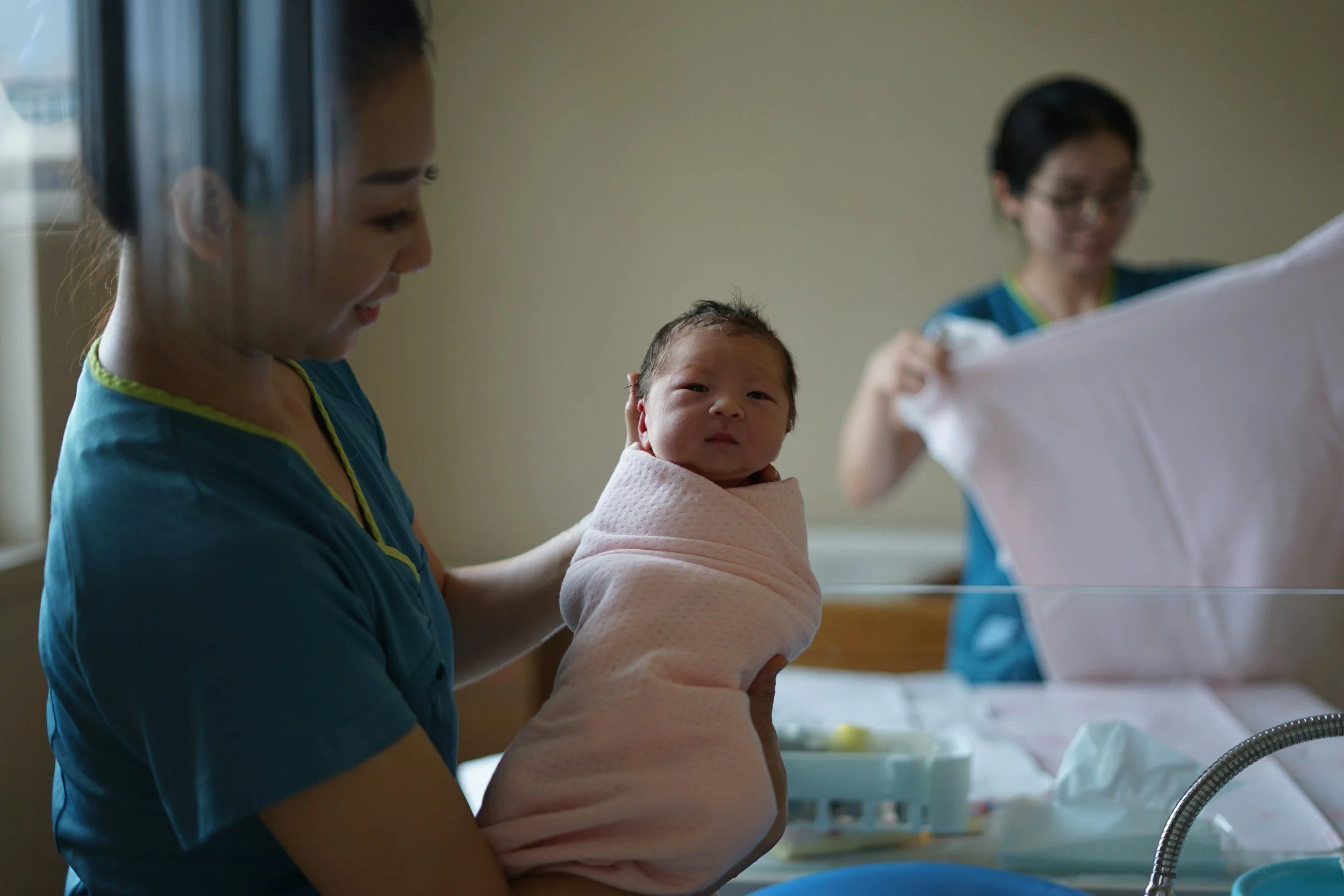
Learn what safe, accountable midwifery really looks like—rooted in education, clinical training, and system integration.